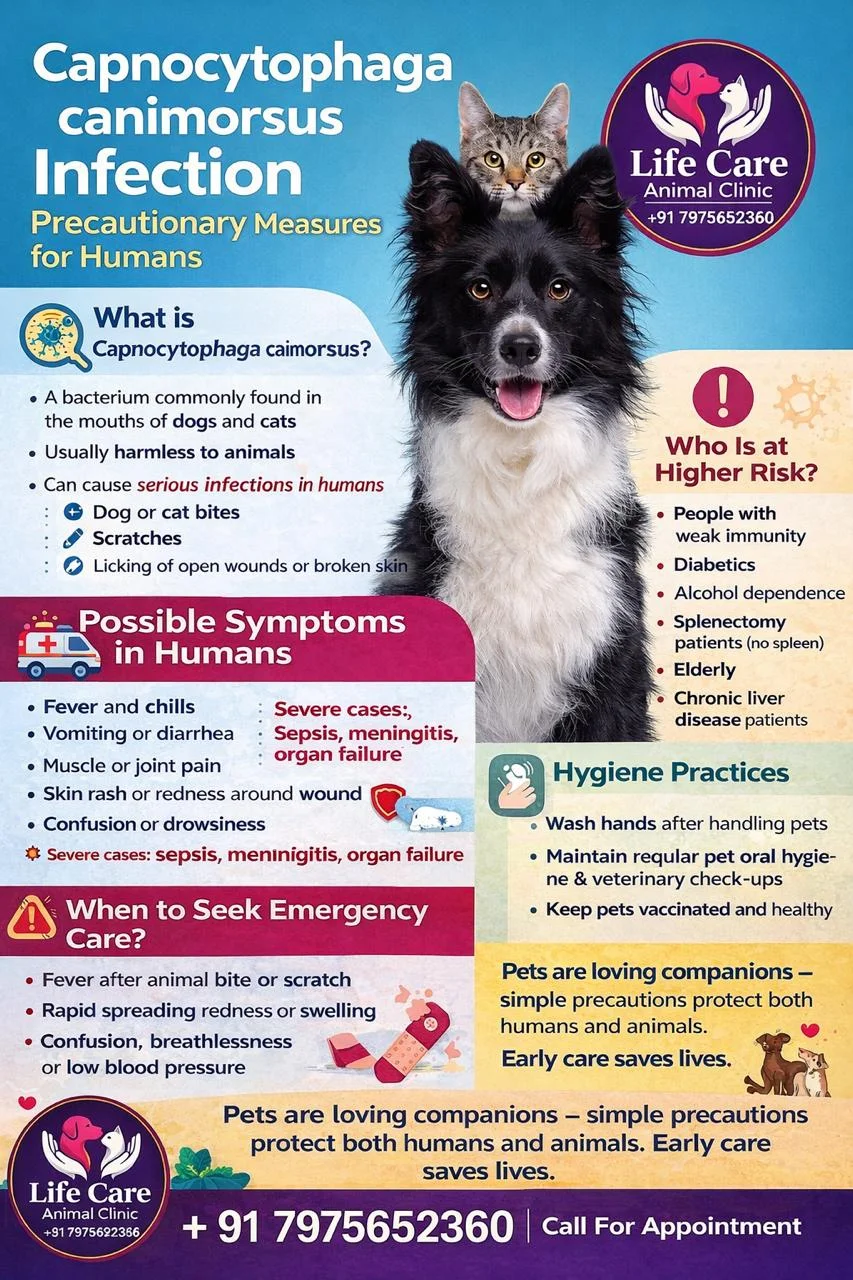
What is Capnocytophaga canimorsus?
Capnocytophaga canimorsus is a bacterium commonly found in the mouths of dogs and cats. While it is usually harmless to the animals that carry it, this bacterium can cause serious infections in humans when transmitted through:
- Dog or cat bites
- Scratches from dogs or cats
- Licking of open wounds or broken skin by pets
Understanding the risks and practicing simple precautions can help pet owners stay safe while continuing to enjoy the companionship of their beloved animals.
Possible Symptoms in Humans
If infected with Capnocytophaga canimorsus, a person may experience the following symptoms, typically within 1 to 14 days after exposure:
- Fever and chills
- Vomiting or diarrhea
- Muscle or joint pain
- Skin rash or redness around the wound
- Confusion or drowsiness
Severe Cases
In severe cases, Capnocytophaga canimorsus infection can lead to sepsis (blood poisoning), meningitis (brain and spinal cord infection), or organ failure. Early medical intervention is critical.
Who Is at Higher Risk?
While anyone can be affected, certain individuals are at significantly higher risk of developing a serious Capnocytophaga canimorsus infection:
- People with weakened immune systems
- Diabetics
- Individuals with alcohol dependence
- Splenectomy patients (people without a spleen)
- Elderly individuals
- Patients with chronic liver disease
If you or a family member falls into any of these categories, it is especially important to practice careful hygiene when interacting with pets.
When to Seek Emergency Care
Seek emergency medical attention immediately if you experience any of the following after an animal bite, scratch, or wound licking:
- Fever after an animal bite or scratch
- Rapid spreading redness or swelling around the wound
- Confusion, breathlessness, or low blood pressure
If your pet has bitten or scratched someone and you are concerned, contact our clinic or call +91 7975652360 for guidance on pet health and next steps.
Hygiene Practices to Stay Safe
Simple daily practices can significantly reduce the risk of Capnocytophaga canimorsus infection:
- Wash hands thoroughly after handling, feeding, or playing with pets
- Maintain regular pet oral hygiene and schedule routine veterinary check-ups
- Keep pets vaccinated and healthy with up-to-date preventive care
- Clean any bites or scratches immediately with soap and running water
- Avoid letting pets lick open wounds or areas with broken skin
Pets are loving companions — simple precautions protect both humans and animals. Early care saves lives.
At Life Care Animal Clinic, Dr. Ajay Satbige (BVSc & AH, MVSc, PhD) and the team are committed to keeping both your pets and your family safe. Regular veterinary check-ups, proper oral hygiene for pets, and timely vaccinations are the foundation of responsible pet ownership.